
The first studio you like may not be the studio you should hire.
Its showreel looks sharp. The animation feels expensive. The sales call goes smoothly. Still, none of that proves it is the best explainer video company for your business.
The real test is less glamorous. Can the team understand your offer without copying the language from your website? Can it spot where your message becomes confusing? Will it challenge a weak brief, or simply animate whatever you send?
Those questions matter because an explainer video is usually expected to do difficult work. It may need to shorten sales conversations, introduce an unfamiliar product, support a launch, or explain a service people keep misunderstanding.
Pretty animation helps. Clear thinking helps more.
Your First Shortlist Will Probably Be Too Broad
Most searches begin the same way. You open several websites, watch a few reels, save the companies with the strongest-looking work, and request prices.
The problem is that showreels are built to impress quickly. They combine the best five seconds from many projects. You see polished transitions, expressive characters, and smooth product shots. You do not see whether the full videos made sense.
Before contacting anyone, reduce the field by defining the actual job.
Is the video for a homepage, paid campaign, investor presentation, sales meeting, or onboarding flow? Does the audience already understand the problem? Is the product physical, technical, abstract, or software-based?
This is the practical starting point for how to choose an explainer video company. You are not looking for the studio with the broadest talent. You are looking for one whose strengths match the communication problem in front of you.
Pay Attention to the Questions Asked on the First Call
The first conversation reveals a great deal.
A weak production team may begin by asking how long the video should be, which animation style you like, and when you need it. Those details matter, but they should not lead the discussion.
A stronger team asks different questions.
Where do prospects get confused? What do they usually ask before buying? Which audience matters most? What happens after someone watches? Has the company tried to explain the same idea before?
These questions show whether the studio thinks like an explainer video production company or simply an animation vendor.
The distinction matters. An animation vendor waits for instructions. A production partner helps shape the message before the expensive work begins.
Listen closely during that first call. The quality of the questions often predicts the quality of the script.
Watch Complete Videos, Including the Boring Ones
Do not stop at the homepage reel.
Ask to see full projects, preferably ones with a similar audience, length, or level of difficulty. A complete video production portfolio tells you whether the studio can hold attention after the first ten seconds.
Watch with the sound off once. Do the visuals still carry meaning? Then listen without looking at the screen. Does the script sound natural, or does it feel like website copy read by a professional voice actor?
An experienced animated explainer video company should be able to show more than technical skill. Look for control. The opening should establish a problem quickly. The middle should not become a feature dump. The ending should lead toward one sensible next step.
Also notice whether every project looks suspiciously similar. Repeated character designs, identical camera moves, and the same scene structure may suggest a template-based process.
Templates are not automatically bad. They are simply a poor fit when you are paying for a video expected to represent the brand for several years.
Industry Experience Helps, but It Can Be Overrated
Exact industry experience feels reassuring.
A medical company naturally wants a team that understands scientific review. A financial business may prefer a studio familiar with compliance. An industrial manufacturer may need animators who can read technical drawings.
That experience can shorten the learning process. It should not become the only requirement.
A studio may never have worked in your exact field but still understand how to explain technical systems, handle cautious buyers, or manage several rounds of specialist approval.
Look for similar communication challenges rather than matching logos.
Has the team turned complicated material into plain language? Has it worked with products that did not yet exist? Can it show a process that is difficult to film? Does it know how to ask for expert review without allowing the script to become unreadable?
Relevant thinking is more useful than superficial familiarity.
Ask to See How the Script Is Developed
A beautiful video can survive average illustration. It rarely survives a poor script.
Ask who writes the script, what information that person receives, and how many people review it before storyboarding begins.
Good scriptwriting and storyboarding should not start with the studio copying paragraphs from your website. The writer needs access to the audience problem, sales objections, product details, and the outcome the business wants.
The storyboard then tests whether the words and pictures are sharing the explanation properly.
A weak storyboard merely illustrates each sentence. If the voice says “teams lose time,” the screen shows a clock. If the voice says “communication improves,” speech bubbles appear.
A better storyboard adds information. It shows where the delay happens, who is affected, and what changes after the solution is introduced.
This stage is where the company proves it understands the idea, not just the chosen animation style.
The Process Should Feel Clear Before You Sign
Many studios describe the same broad stages: discovery, script, storyboard, design, animation, and delivery.
The useful details sit underneath those labels.
Who leads the project? When do you approve the visual direction? Will you see an animatic before full animation? How is feedback gathered? What happens when two stakeholders disagree?
A dependable creative process gives you clear moments to make decisions.
It should also protect the production team from endless changes. Once a scene is fully illustrated and animated, replacing the central idea is no longer a small edit.
The company should explain this without sounding defensive. Clear boundaries are not a warning sign. Vague boundaries are.
Decide Whether You Need Custom 2D or Just a Clean Message
2D animation works for far more than cartoon-style storytelling.
It can explain services, show workplace situations, simplify healthcare topics, introduce a financial process, or visualize something that would be expensive to film.
A 2D explainer video company is a good fit when the message depends on people, emotions, customer journeys, or abstract ideas.
Ask how much of the work will be original.
Will the characters and environments be designed for your brand? Are prebuilt assets being adapted? Can the same design system support future videos?
There is a place for both template-led work and custom animation. The choice should reflect how important and long-lasting the asset will be.
A short internal training clip may not require an original visual world. A homepage video being used across sales, advertising, and social media probably deserves more care.
Compare Proposals Line by Line, Not Price by Price
Two companies may quote $6,000 and $9,000 for what appears to be the same job.
Often, the scope explains the gap.
The higher proposal may include scriptwriting, professional voice talent, captions, licensed music, several delivery formats, and an extra review stage. The lower price may cover animation only.
This is how to compare explainer video production companies fairly. Send each studio the same brief, then compare what is actually included.
Check the number of concepts, revision stages, final formats, usage rights, voiceover terms, source files, and expected timeline.
Ask about possible extras too. A vertical version, foreign-language edit, rush request, or revised software screen may carry a separate fee.
The cheapest proposal can become expensive when basic deliverables were never part of the original number.
Use 3D Because It Explains Something
3D looks impressive, which is exactly why companies sometimes choose it for the wrong reason.
A 3D explainer video company makes sense when the audience needs to understand form, internal construction, physical movement, scale, materials, or a product that has not yet been manufactured.
Look carefully at technical accuracy in the portfolio. Attractive lighting is not enough. Parts should move correctly. Materials should behave believably. Camera movement should reveal information rather than circle the object for effect.
Ask what reference material is needed. The studio may request CAD files, engineering drawings, product photography, or access to a technical specialist.
3D usually carries a larger budget and longer video production timeline. It should earn that extra investment by showing something 2D, live action, or ordinary photography cannot.
Review the Revision Rules Before the Project Begins
A sentence such as “two rounds of revisions included” sounds clear until feedback starts.
Two rounds across the entire project? Two rounds at each stage? Does one email count as a round, even when it contains notes from only one department?
Read the revision policy before signing.
A fair agreement gives you meaningful opportunities to review the script, storyboard, design, and animation. It should also explain when a request becomes a scope change.
Changing one color is not the same as replacing the visual concept. Correcting a production error is not the same as rewriting an approved script after leadership sees it for the first time.
Bring the real decision-makers in early. Late internal feedback is one of the fastest ways to damage a schedule and increase the budget.
Software Companies Need a Very Specific Kind of Partner
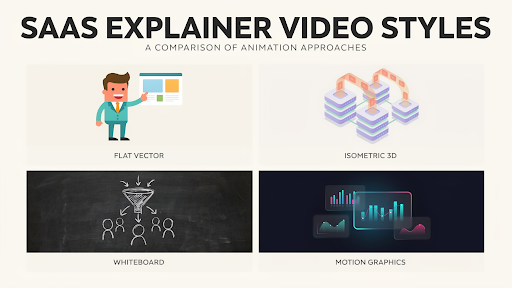
Choosing an explainer video company for SaaS requires more than finding someone who can animate a screen.
Software videos often fail because they show too much. The cursor moves from feature to feature while the voiceover tries to explain the entire product.
A capable SaaS explainer video company starts with the user’s frustration and the outcome the platform creates. The interface appears when it helps tell that story.
Review how the studio handles UI. Is the screen readable on mobile? Does the viewer know where to look? Are real product screens simplified carefully, or changed so heavily that they become inaccurate?
The company should also understand the difference between a homepage explainer, feature demo, onboarding tutorial, and paid advertisement.
They may share visual assets. They do not share the same purpose.
Talk to Past Clients About the Difficult Parts
Testimonials usually describe a successful ending. Ask about the middle.
Look for independent client reviews, then speak to one or two recent clients when the project carries a significant budget.
Ask whether the original estimate remained accurate. Did the producer communicate delays early? Was feedback handled well? Did the final delivery include everything promised?
Creative production always contains a few uncomfortable moments. A script may need another draft. An animation test may not work. A deadline may be threatened by late feedback.
The important question is how the company behaves when the project becomes less convenient.
That is often what to look for in an explainer video agency. Reliability is easier to judge through problems than through a polished sales presentation.
The Final Decision Is Usually About Fit
After the portfolio reviews, proposals, and calls, you may still have two good options.
At that point, stop looking for a perfect scorecard.
Choose the team whose strengths fit the project. Consider how much guidance your company needs, how many people will approve the work, and how much risk sits behind the launch.
Your final questions to ask an explainer video company should be direct:
Who owns each stage?
What could change the price?
What do you need from us each week?
Where do projects like this usually go wrong?
Who owns the final assets?
Can this visual system support future content?
A strong production partner will answer without hiding the difficult parts.
Final Words
The best explainer video company for your business is not necessarily the cheapest, largest, or most decorated studio.
It is the team that understands the communication problem, asks useful questions, writes clearly, manages feedback well, and chooses a production style for a reason.
Watch full videos rather than reels. Compare identical scopes. Read the revision terms. Check rights, formats, and deadlines before signing.
Most importantly, notice whether the company improves your thinking during the first conversations. A good production partner should make the message clearer before a single frame is animated.
